Building Better Infrastructure: How Asite Streamlines Developer Workflows
Samira Khoury
February 26, 2026
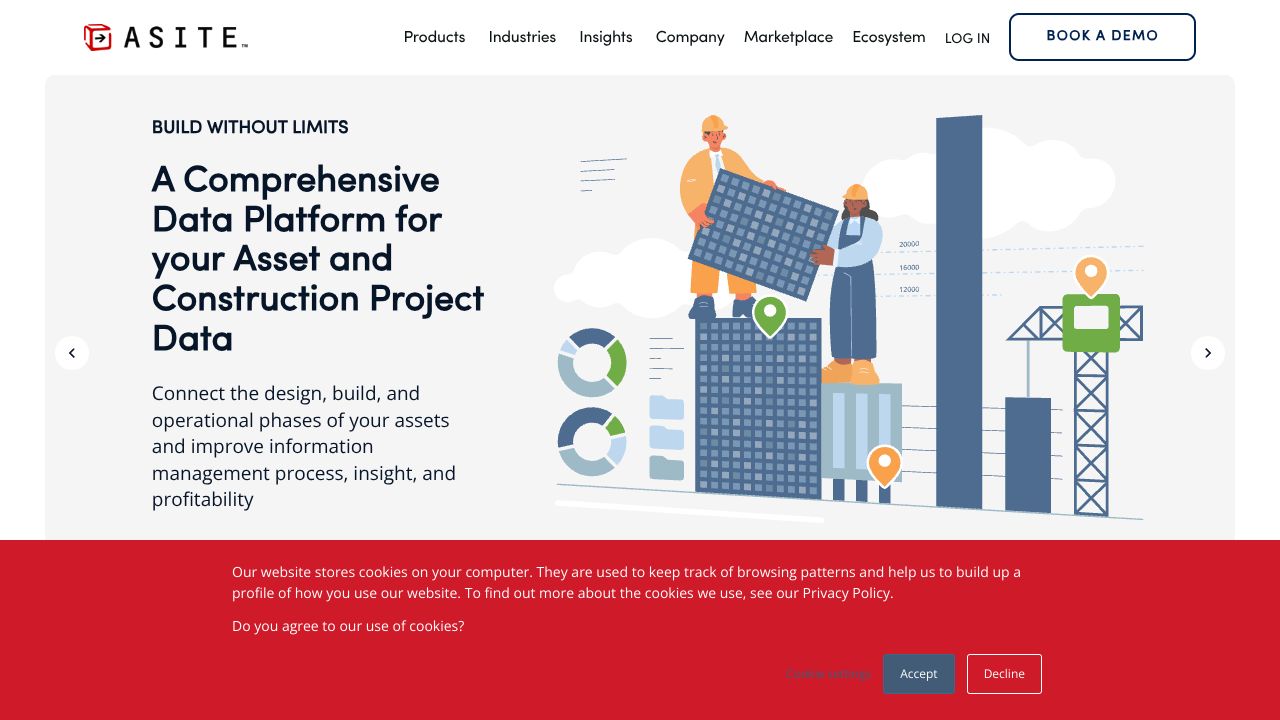
When collaboration platforms promise unity, they usually create new silos — Asite is the rare exception.
Asite is a cloud-native construction management platform that centralizes project data, BIM, and workflows across preconstruction to handover. It matters because construction is where software failure equals schedule blowouts and multimillion-dollar rework; Asite reduces that by enforcing a single source of truth with configurable automation and mobile BIM. Bottom line: for mid-to-large builders and engineering firms that coordinate many teams, Asite turns chaotic data handoffs into auditable, real-time operations.
The Business Case
In my 15 years in developer tools and ops, the biggest ROI in collaborative platforms comes from eliminating handoff friction, not flashy dashboards. Asite directly attacks the costly failure modes in construction: duplicated drawings, late RFIs, unmanaged change orders, and disconnected field/office workflows. These failure modes manifest as schedule delay, claims, and rework — often 5–15% of contract value on complex projects. By providing a common data environment (CDE), version control for 300+ file types, BIM-linked issue tracking, and automated reporting, Asite compresses decision latency and reduces dispute exposure.
For leadership, that translates into measurable outcomes: fewer change-order disputes, lower inspection rework, and faster handovers — all of which improve margin and free up capital for new projects. The platform’s entry-level pricing (noted at $50 one-time) is attractive, but what matters more is the lifecycle TCO: integrations, configuration, and governance that determine whether the platform becomes a competitive advantage or shelfware. What others won’t tell you: the software is the easy part; disciplined data governance and change management deliver the returns.
Key Strategic Benefits
- >Operational Efficiency: Asite removes manual syncing and email-driven approvals by centralizing RFIs, submittals, and change orders with configurable workflows. That reduces administrative drag and accelerates decision cycles between contractors, designers, and owners.
- >Cost Impact: Reduced rework and clearer audit trails lower direct costs and insurance exposure; faster handovers improve cash-flows and project throughput. Savings compound on portfolios of repeat projects where templates and automations are reused.
- >Scalability: The cloud architecture and CDE connectors support multi-team, multi-project portfolios with consistent governance; visual workflows let you scale processes without custom development. This makes Asite practical for enterprise rollouts across regions.
- >Risk Factors: Expect upfront costs in configuration, integrations with ERPs/estimating tools, and training for field crews on mobile BIM. The $50 one-time price masks the need for enterprise licensing and professional services on large programs.
Implementation Considerations
Plan implementation as a program, not an app rollout. Typical timelines for mid-sized portfolios run 3–9 months: pilot one project (6–10 weeks), stabilize integrations and workflows (8–12 weeks), then phased rollouts. Critical resources: a project owner from PMO, a technical integrator for CDE/ERP/BI connections, and on-site champions in field operations. Focus first on high-friction handoffs (RFIs, submittals, change orders) and a single BIM use case to demonstrate value.
Change management wins are procedural: lock in governance (naming, versioning, permissions), define escalation SLAs, and bake automation into weekly reports to expose early wins. Expect a modest professional services spend for connectors and template design; treat that as investment, not sunk cost. Measure outcomes with leading indicators (RFI turnaround time, drawing re-issuance frequency) and financial KPIs (rework hours, claim dollars avoided).
Competitive Landscape
While Bitrix24 excels at integrated CRM and team communication with AI-driven task automation and friendlier pricing for general business teams, it’s not built around CDEs or BIM workflows — so Asite is better suited for construction-grade collaboration and model-linked issue resolution. Endlesss demonstrates how real-time creative collaboration can be made social and AI-assisted, but it's a reminder that collaboration UX alone doesn’t substitute for strict lifecycle control in regulated, multi-party construction contexts. RedTeam is contractor-designed and strong on contractor workflows and cost control; however, Asite’s stronger BIM integrations, broader file-type support, and configurable CDE connectors make it a more complete platform for owners and large engineering firms managing multi-party portfolios. Each competitor has merits — choose based on whether your priority is CRM/communication, contractor-native workflows, or enterprise-grade project lifecycle control.
Recommendation
If your portfolio includes multi-million-dollar, multi-party projects, initiate a short pilot with Asite focused on one BIM-enabled project and RFI/change-order workflows. Assign PMO sponsorship, budget professional services for connector work, and measure RFI turnaround and rework cost reductions within 90 days. If the pilot shows 10–15% improvement in those metrics, proceed to a staggered enterprise rollout and formalize CDE governance. For comparison reading, review the linked analyses of adjacent tools to validate scope and fit.
$ open --external
Visit Asite→